What is a Porsche Cayenne specialist?
A Porsche Cayenne specialist is a mechanic who knows Porsche's large SUV generation by generation. The first Cayenne, built in two phases called the 955 and 957, ran from 2003 to 2010. The 958 followed from 2011 to 2018, and the current 9Y0 arrived for 2019. They share a name and a purpose, and very few mechanical parts.
Knowing which one you drive is the first thing to expect from any Porsche mechanic you hand the keys to. It decides where a mechanic looks first when something fails, whether that's a leak under the engine or Porsche suspension repair on a car that sags or knocks.
One fact trips people up: no Cayenne has a PDK gearbox. Automatic Cayennes use a Tiptronic, a conventional automatic with a torque converter, from the first generation to the current one. If you've been told yours needs PDK work, something has been mixed up, and it's worth a second opinion before paying.
Why does the generation matter on a Cayenne?
The best-known example is the first-generation V8, the 2003 to 2006 S and Turbo. Porsche ran its coolant through plastic pipes under the intake manifold, the hottest sheltered spot on the engine. Years of heat make them brittle, and a crack can empty the coolant quickly. The lasting fix is a set of aluminum pipes, covered under Porsche cooling system repair.
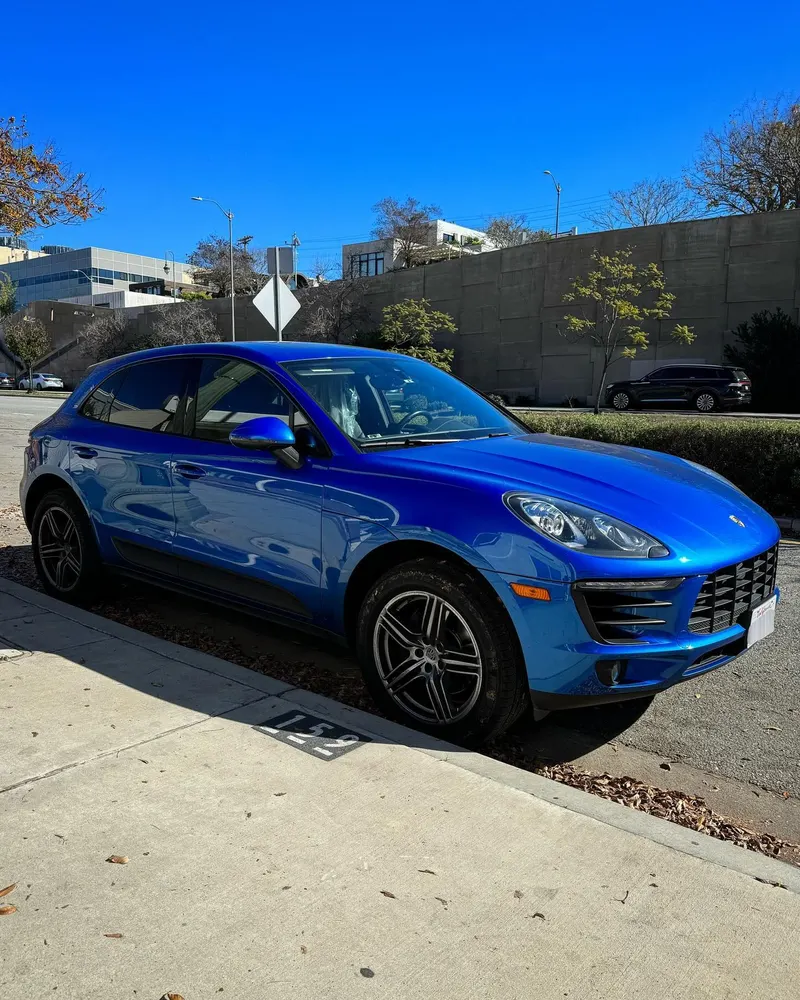
The first generation also has a driveshaft support bearing in a rubber mount that tears with age and knocks when you pull away. The 958 changed the drivetrain. Most 958s send power to the front wheels through a clutch in the transfer case, much like the Macan, and that clutch can judder when it wears. Tires that don't match make it worse, as our Porsche Macan specialist page explains.
The 9Y0 moved every engine to turbocharging, with the turbos tucked inside the V of the engine. That puts heat at the top of the engine, where hoses and wiring live. It's also the first Cayenne with wider rear tires than front, so they can't be rotated front to back.
Cayenne ownership in Los Angeles
On the Westside, a Cayenne is often the family car and the tow car in one. It carries kids through traffic on Sunset and San Vicente, then pulls a boat or trailer over the Sepulveda Pass toward the Valley. A heavy SUV in stop-and-go traffic goes through brake pads and discs faster than a sports car, and towing in summer heat asks a lot of the cooling system.
Air suspension is the other LA story. Steep driveways in Bel Air and the hills above Sunset, plus speed bumps in parking structures, mean the ride height changes all day. A small leak in an air spring usually shows up in the garage first, as one corner sitting lower in the morning than it did the night before. Report it early, while it's still small.
Signs your Cayenne needs a specialist's look
Sweet smell or dropping coolant
On a 2003 to 2006 V8, suspect the plastic coolant pipes first. If the gauge climbs, stop and switch off.
A thump under the center console
On first-generation cars, often the driveshaft support bearing. It gets worse quickly.
One corner sits low overnight
An air suspension leak. Find it before the compressor wears itself out.
Judder in tight turns
On 958 and later cars, often the transfer case clutch. Matched tires and fresh fluid are worth ruling out first.
Harsh or late shifts
On the Tiptronic, often a fluid or valve body matter rather than a failed gearbox.
Brake wear warning
Pads and discs are a regular item on a heavy SUV. Book soon and brake gently until then.
What a first look at a Cayenne usually covers
A Cayenne is heavy and has a lot going on underneath. A first look usually covers the systems each generation is known for, plus the wear items every Cayenne goes through:
- Generation, engine and trim identified from the VIN
- Fault memory read from the control units, including chassis and air suspension
- Coolant pipes and fittings on V8 cars
- Ride height at each corner after the car has sat
- Driveshaft support bearing and transfer case behavior
- Brake pads, discs and tires
- The underside, for oil and coolant leaks
The Cayenne generations we know
Here's the short version of what each generation tends to bring to the shop, so you know what to ask about yours:
955 (2003 to 2006)
V6 and V8 engines. Plastic coolant pipes on the V8, driveshaft bearings and aging air springs.
957 (2008 to 2010)
The updated first generation with larger direct-injection engines. Driveshaft bearings and air suspension still worth checking.
958 (2011 to 2018)
Lighter, with an eight-speed Tiptronic and a clutch-type transfer case. Watch for judder in tight turns.
958 S (2015 to 2018) and GTS (2016 to 2018)
A twin-turbo 3.6 V6 shared with the Macan. Oil seeps at the timing cover are the known item.
9Y0 (2019 on)
Turbo V6 and V8 engines with the turbos inside the V. Many are still under factory warranty.
Air suspension: fix the leak or replace the compressor?
Cayenne air suspension uses an air spring at each corner, a compressor that fills them and sensors that report ride height. With age, the springs and their fittings start to leak. A small leak lets a corner sink overnight, and the compressor refills it every morning, running a little longer and hotter each time.
Eventually the compressor wears out and a chassis warning comes up. Replacing only the compressor sends the new one back to work against the same leak. Find the leak first. A car that stays level for days with the engine off doesn't have one, and a car that drops at one corner tells you where to look.
When a Cayenne repair belongs at the dealer
If your Cayenne is still under factory warranty and something fails, the repair is free at a Porsche dealer, and so are recalls and software campaigns. Some work isn't needed at all: if a 2003 to 2006 V8 already shows aluminum coolant pipes on its invoices, it doesn't need them again, whatever anyone suggests.
Why Westside Cayenne owners choose The Werkstatt
We're an independent shop that has worked on Porsches, and nothing else, for more than 30 years. The Werkstatt has one location, at 10527 Santa Monica Blvd in West Los Angeles, and works on every Porsche model line, from the 911 and Boxster to the Cayenne and Panamera.
A Cayenne repair bill can be large, so the first step is simple: bring the car in, we evaluate it, and we give you a quote. You decide from there.
Book a Cayenne specialist in West Los Angeles
For a Cayenne specialist near you in Los Angeles, call (310) 310-3959 or request a quote and we'll get back to you as soon as possible. Bring the car to Santa Monica Boulevard in West LA, about a mile east of the 405, and we'll evaluate it and give you a quote. It helps to have the model year, the trim (base, S, GTS, Turbo or hybrid), the mileage and whether it has air suspension. If a corner sits low, note which one and how long it takes to drop.