
· By The Werkstatt
Where the Dipstick Went
Many modern Porsches have no dipstick because the engine measures its own oil level with a sensor in the oil pan. You read that level on the instrument cluster instead of on a metal stick. On many cars you find it in the car's menu or on a short oil level screen after the engine has warmed up. Depending on your model and year, the exact steps differ, so your owner's manual is the first place to look.
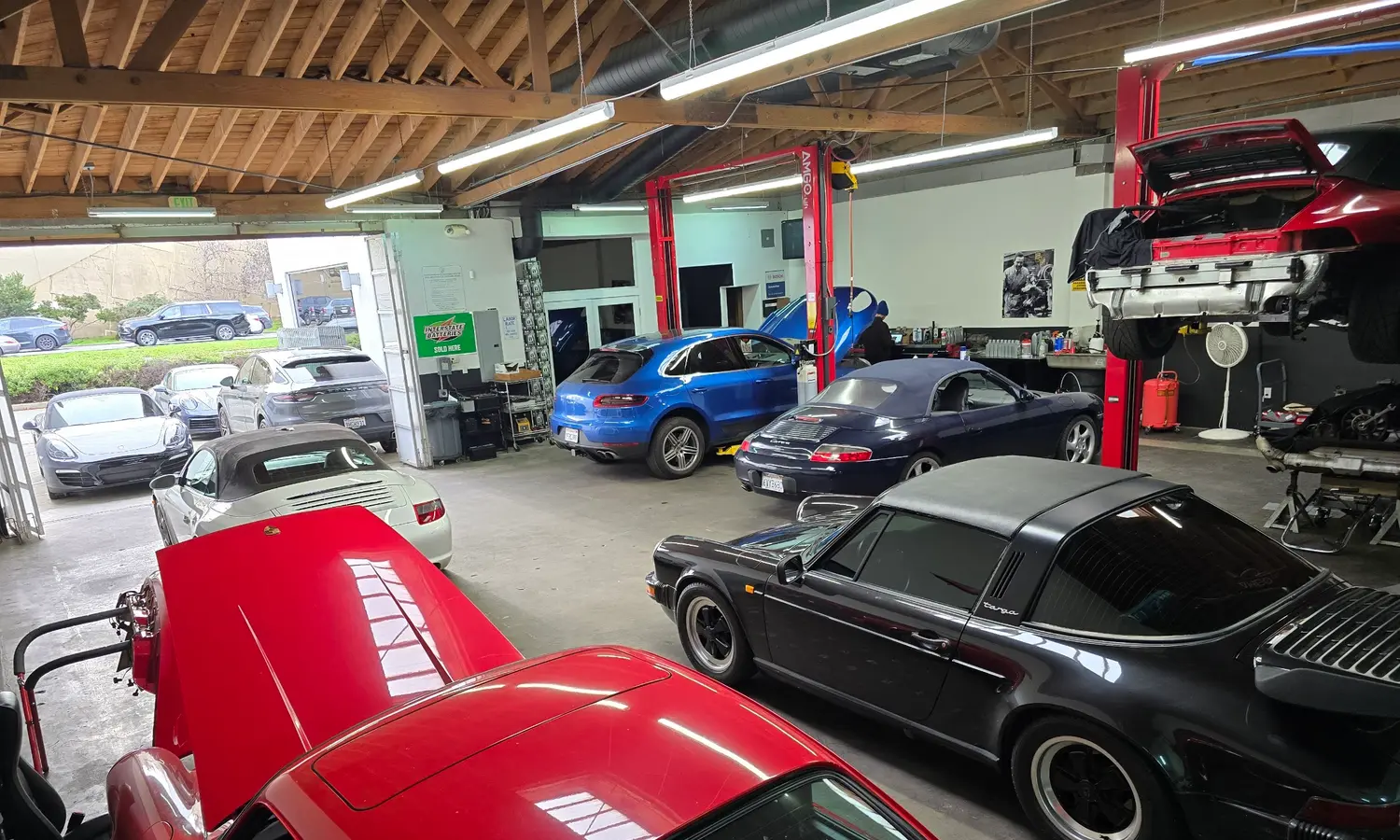
We are The Werkstatt, an independent Porsche specialist in Los Angeles. We see this question often from new owners of a 911 or a Macan who open the hood, look for a yellow handle, and find nothing. Nothing is missing. The car simply reports the level electronically.
The sensor can read the oil more consistently than a stick read by eye in a dim garage. It does need the right conditions to give a good reading, and that is where most confusion starts.
How to Check Your Oil Level on the Dash
The reading is only as good as the conditions you give it. A few habits make it reliable:
- Park on level ground. A slope tilts the oil in the pan and skews the reading.
- Let the engine reach normal running temperature. Many cars will not show a level until it does.
- Give the oil a short while to settle after you shut off or idle, as your manual describes.
- Open the oil level display in the cluster menu and read the bars or the message.
If the screen says the reading is not available, the car is usually telling you a condition is not met yet. Drive a little longer, park level, and try again. If it never shows a level at all, the sensor or its wiring may need a look.
When the display asks for oil, add only a small amount at a time, then let the car read it again. Use the Porsche-approved oil for your engine. If you are not sure which oil that is, our Porsche Oil Change service uses the approved oil and the quantity your engine calls for, and we confirm the level on the electronic gauge before the car goes home.
Why Overfilling Is a Problem
More oil is not safer. A Porsche engine is built to run with its oil in a set range, and going over the top mark causes its own trouble.
With too much oil, the spinning crankshaft can churn the oil into foam. Foamy oil carries air, and air does not protect bearings the way oil does. Extra oil can also be pushed through the crankcase breather into the intake. You may see blue smoke on start-up, a smell of burning oil, or a rough idle.
Overfilling also raises pressure inside the crankcase. That extra pressure pushes on seals and gaskets that were never meant to hold it. Over time it can turn a dry engine into one that seeps. This is one reason we ask about recent top-ups when a car comes in for Porsche Oil Leak Repair. We repair leaks from valve covers, rear main seals, timing covers, tubes and O-rings on every Porsche model.
If you think you have overfilled, do not keep driving hard on it. Call us. Draining the excess is a simple job, and it is far cheaper than chasing a leak or a fouled intake later.
How Often to Check, and When to Act
The car watches its oil for you, but it is still worth a look on your own schedule. A good habit is to check every few fill-ups and before any long drive. Check more often on an older car, a car you just bought, or one that has started to use oil.
Know what normal looks like for your car. Some Porsche engines use a little oil between services, and that can be fine. What matters is a change. If you find yourself adding oil more often than before, that is the moment to act.
Watch for these signs:
- A low oil warning on the dash, especially soon after a top-up.
- Spots under the car where it sits overnight.
- A burning oil smell after a drive, which can mean oil dripping onto hot exhaust parts.
- Blue smoke from the tailpipe, at start-up or under load.
Oil on the ground points to a leak. Oil that disappears with no drip points inside the engine. Our Porsche Engine Repair work covers smoke, misfires, timing rattles and oil use on every Porsche engine, from the flat-six to the Cayenne V8.
A red oil pressure warning is different from a low level message. If you see one, pull over safely and shut the engine off. Do not drive on it.
Good questions to ask any shop about oil use: Is my level steady between services? Is there a leak, and where does it start? Is the oil going out the bottom or being burned? Is the sensor reading true? A clear answer to each one tells you whether you need a seal, an engine look, or just a correct top-up.
Talk to The Werkstatt
If your dash reading confuses you, your car keeps asking for oil, or you have found spots under it, give us a call at (310) 310-3959. We are a Porsche-only shop at 10527 Santa Monica Blvd, Los Angeles, CA 90025, on the Westside, open Mon – Fri 8:00 AM – 6:00 PM.
We will read the level properly, find where any oil is going, and tell you plainly what your car needs and what it does not. Drivers come to us from across Los Angeles, including Santa Monica, Beverly Hills, West Hollywood and Culver City.