
· By The Werkstatt
How Long a Porsche Can Sit, and What Goes First
A Porsche can sit for a short spell without harm, but it starts to suffer sooner than most owners expect. The battery is usually the first thing to go, because the car keeps drawing power while it is parked. Fuel goes stale, tires take a set where they rest, and brake fluid and oil keep aging on the calendar whether the car moves or not. With a battery maintainer and some simple preparation, a Porsche can sit through a long season and wake up healthy.
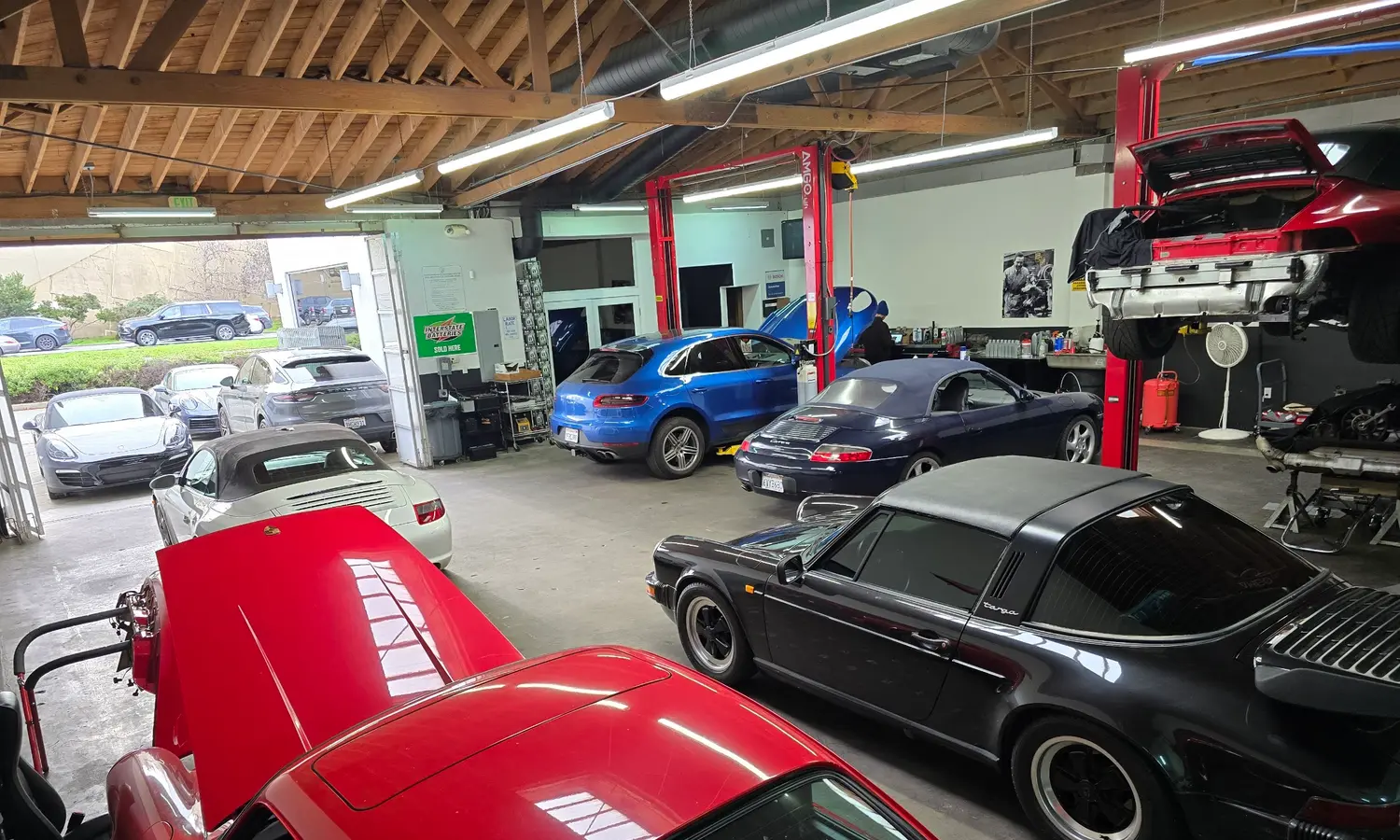
At The Werkstatt, an independent Porsche specialist in Los Angeles, we see the same pattern every time. A car that sat with no plan comes in with a flat battery and a dash full of warnings. A car that was stored with care starts and drives like it was parked yesterday.
The difference is not luck. It comes down to a handful of things that age while the car sits still, and each one has a fix.
The Battery: Why It Dies and What a Maintainer Does
A modern Porsche is never fully asleep. Control units, the alarm, the keyless entry and the clock all draw a small current, even with the key out of the car. Over time that slow drain pulls the battery down until the car will not start.
A battery that runs flat once can recover. A battery that sits flat for a long time often cannot, and it may never hold a full charge again. A weak battery also causes trouble beyond a no-start. Low voltage can set off a string of warning lights and fault codes that look alarming but trace back to power, not to a broken part.
The fix is a battery maintainer, sometimes called a smart charger or tender. It plugs in while the car is parked, watches the battery, and tops it up only when it needs it. Unlike an old trickle charger, it will not cook the battery by charging nonstop. If you store a Porsche, a maintainer is the single most useful thing you can buy.
If your car already sat too long and now shows warnings or will not start, our Porsche electrical diagnostics work sorts out whether the battery is the whole story or whether something else is drawing power.
Fuel, Tires and the Fluids That Age on the Calendar
Fuel starts to break down as it sits. It loses the parts that help it burn cleanly, and it can leave varnish in the fuel system. Before storage, fill the tank so there is less room for moist air, and add a fuel stabilizer. Then drive the car a short distance so the treated fuel reaches the whole system.
Tires flat-spot when a car rests in one place. The section touching the ground takes a set, and you feel it as a thump or vibration when you first drive off. Short flat spots often round out once the tires warm up. Long ones can stay. Set the pressure to the top of the range on your door jamb label before storage, and if you can, roll the car a little now and then so it rests on a new spot.
Brake fluid is the one most owners forget. It draws in moisture from the air over time, whether the car is driven or parked. Wet fluid boils sooner under hard braking, and the water inside it can corrode parts deep in the brake system. That is why we do a Porsche brake fluid change every two years on every Porsche, including the clutch circuit on manual cars. The interval runs on time, not miles, so a car that barely moved is still due.
Engine oil ages the same way. Used oil holds acids and moisture from past driving, and those sit against the engine's parts while it rests. Fresh oil before storage is a good habit. A Porsche oil change with the approved oil for your engine, at the right quantity and read on the electronic gauge, means the engine sits in clean oil.
Waking a Porsche Up After Storage
When it is time to drive again, take a few minutes before you turn the key. Check the tire pressures and bring them back to the normal figure. Look under the car for fresh drips, since seals can dry out when a car sits. Check that nothing has nested in the engine bay or the intakes.
On the first drive, go easy. Let the oil come up to temperature, and test the brakes gently, because the discs may carry a light layer of rust that wipes off after a few stops. Listen for a thump from the tires and watch for warning lights.
Call us before you drive if any of these show up:
- The car cranks slowly or not at all, even after charging
- Warning lights stay on after the car is running
- The brake pedal feels soft or sinks
- A vibration from the tires does not fade as they warm up
- You see fresh oil or coolant under the car
If you are not sure what your car is due for after a long rest, our Porsche maintenance schedule page lays out the common intervals in plain words, so you can see which items run on time and which run on miles.
Book a Check-Up at The Werkstatt
The Werkstatt is an independent, Porsche-only shop with 30+ years on the marque. Whether you are getting ready to store your car or bringing it back to life, we can charge or test the battery, change the brake fluid and oil, and look the car over before you drive.
Call us at (310) 310-3959. We are open Monday through Friday, 8:00 AM to 6:00 PM, at 10527 Santa Monica Blvd, Los Angeles, CA 90025.